Start with the invitation
The outfit can wait until you have read the small print on the invitation. A ceremony and a reception may share a card, but their arrival times are not interchangeable. An address covering several halls also deserves a closer look. The host can point you to the right entrance before you set off.
Replying by the requested date helps the hosts plan. Saving the contact of a relative helping on the day gives you someone to call without interrupting the couple while they are getting dressed.
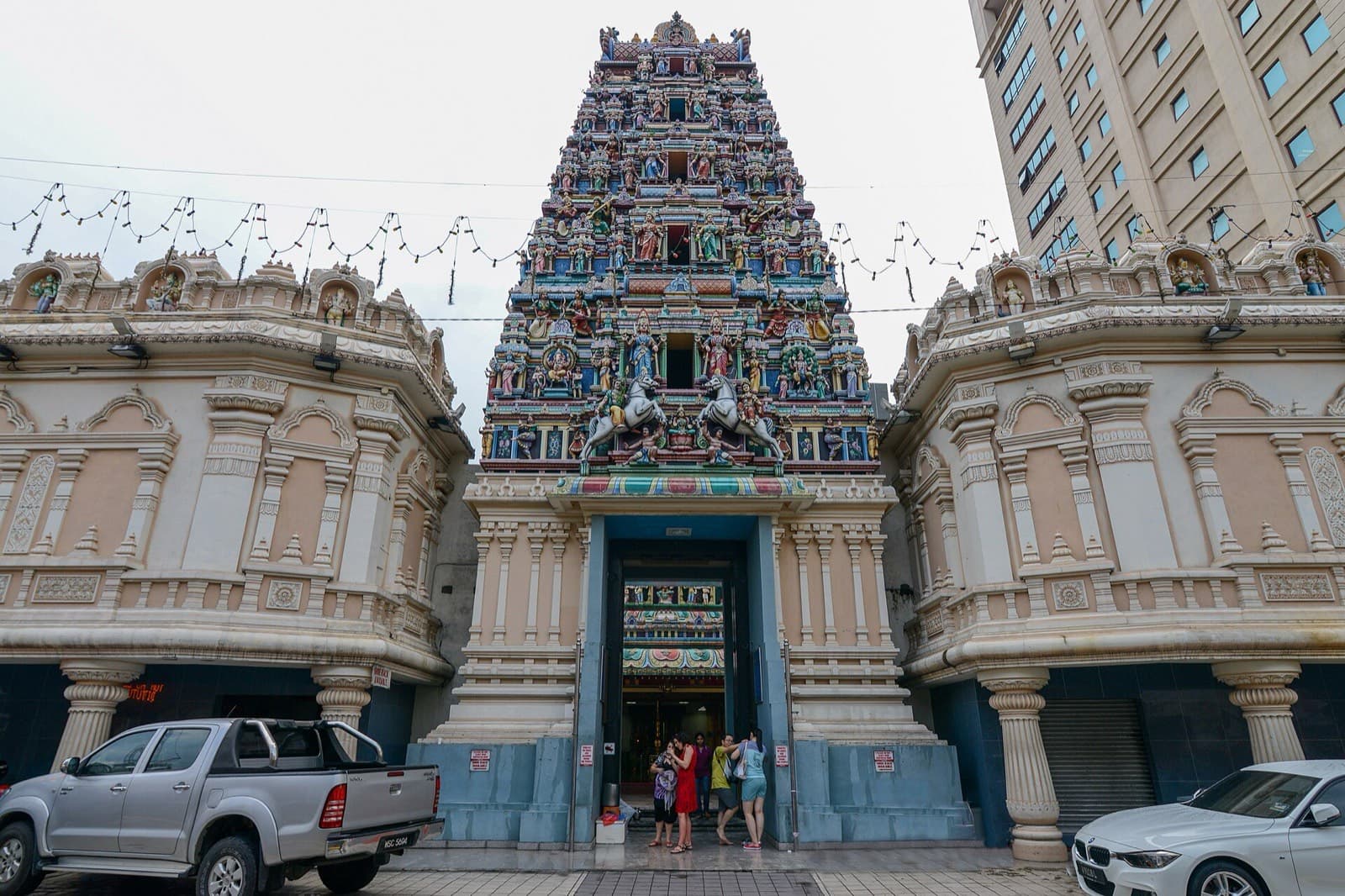
At Hindu weddings, muhurtham refers to the auspicious time selected for the ceremony. Temple ceremonies can start before sunrise. The stated ceremonial time is the one to plan around, with room beforehand for parking and removing your shoes. An early start is not an invitation to arrive halfway through. If you are late, an usher can help you enter without interrupting.
Dress for the service you are attending
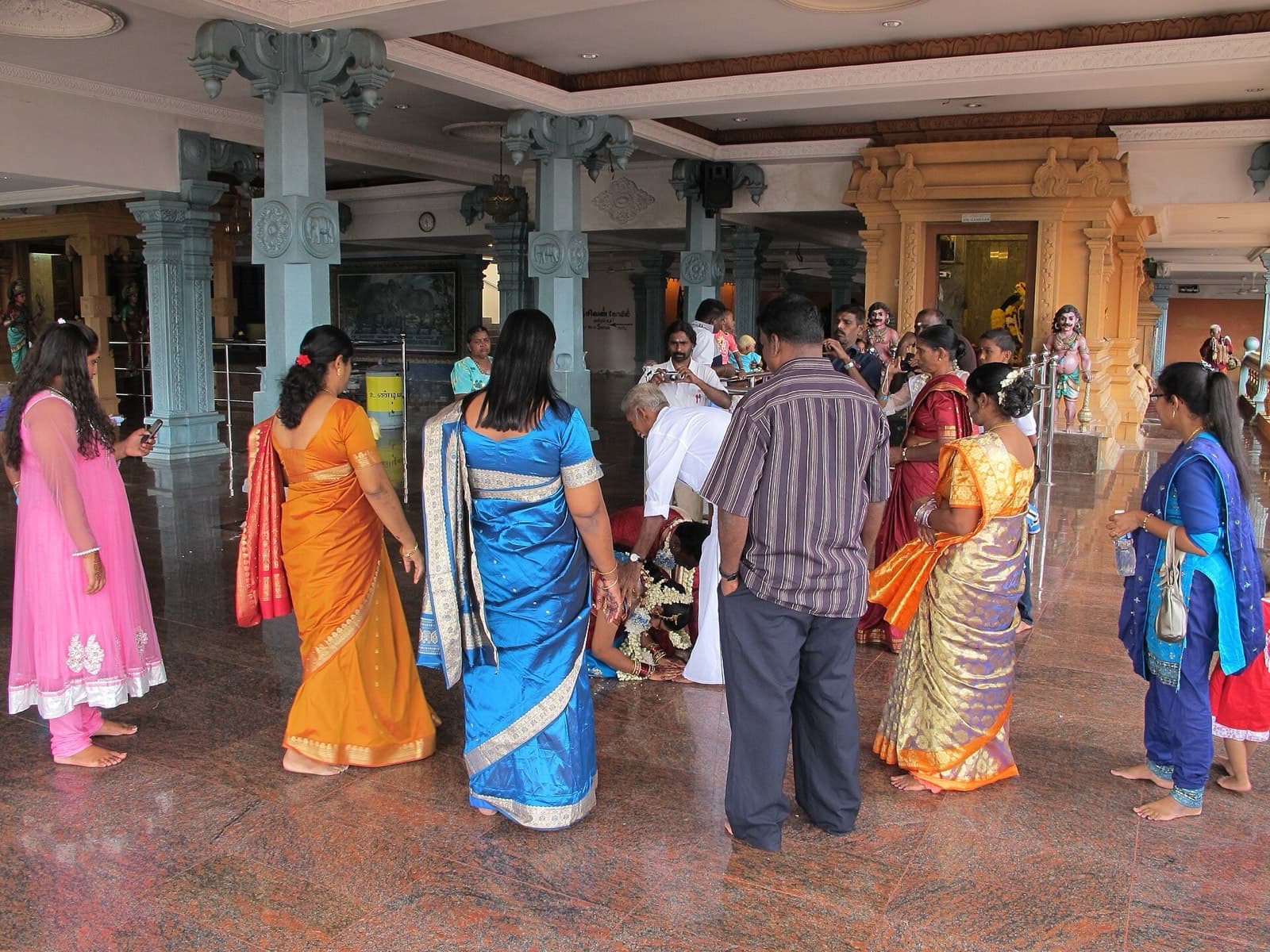
Bright colours are welcome at many Hindu weddings, while modest attire suits the religious ceremony. Many families avoid all-white or all-black guest outfits, but that is a family preference, not a rule for every Indian wedding. There is no need to buy a saree. Comfortable clothes you can sit in are useful; a shawl can cover shoulders left bare by an evening outfit.
For a temple visit, shoulders and knees should be covered, and shoes removed where directed. Modest formal clothes suit a church ceremony. The reception dress code may not suit the service, so ask your hosts if the parish has any requirements.
In a gurdwara, everyone covers their head and removes their shoes before entering the worship space. A scarf or suitable cloth can go in your bag before you leave. Spare head coverings are usually available, but bringing your own avoids relying on the supply.
A cash gift is not a dinner bill
Cash in an envelope is a common gift at Malaysian Indian weddings. Among many families, amounts ending in one, such as RM51 or RM101, follow an auspicious gifting custom. Those figures are examples, not a price list. Your budget and any request for no gifts should guide the decision, without borrowing money to match a venue's dinner charge.
At some Tamil weddings, you may hear moi used for the monetary gift and its record. A moi book records names and contributions, sometimes at a table near the entrance. This is documented Tamil practice, but it is not safe to assume every Malaysian Tamil wedding uses it. Where there is a moi table, the family's instructions will explain the arrangement. Giving your name clearly helps with the record; other guests' amounts remain their business.
A mixed or Chinese-influenced celebration may raise the choice of a red packet or another envelope. Malaysian wedding guidance describes festive packets for Indian weddings and angpow customs across communities. The hosts' preference can settle the choice. A labelled envelope handed to the designated person tells the couple whom to thank and avoids leaving money beside an unattended guest book.
Inside the place of worship
A wedding invitation does not open every part of the building to guests. At a temple, permission is needed before photographing a shrine, and no-photography signs apply. The aisle still needs to stay clear, even if someone else has found a tempting angle for a picture.
At any religious ceremony, put your phone on silent and take conversations outside. In a gurdwara, visitors can sit and observe; bowing before the Guru Granth Sahib is not obligatory for observers. Guests who need accessible seating can ask for guidance.
Church ushers can direct you during the service, while your host can explain participation beforehand. Photography near the ceremonial area or shrines needs particular care. Permission from the officiant or venue staff comes before using flash or moving closer for a shot.
Stay for the meal and make room for other guests
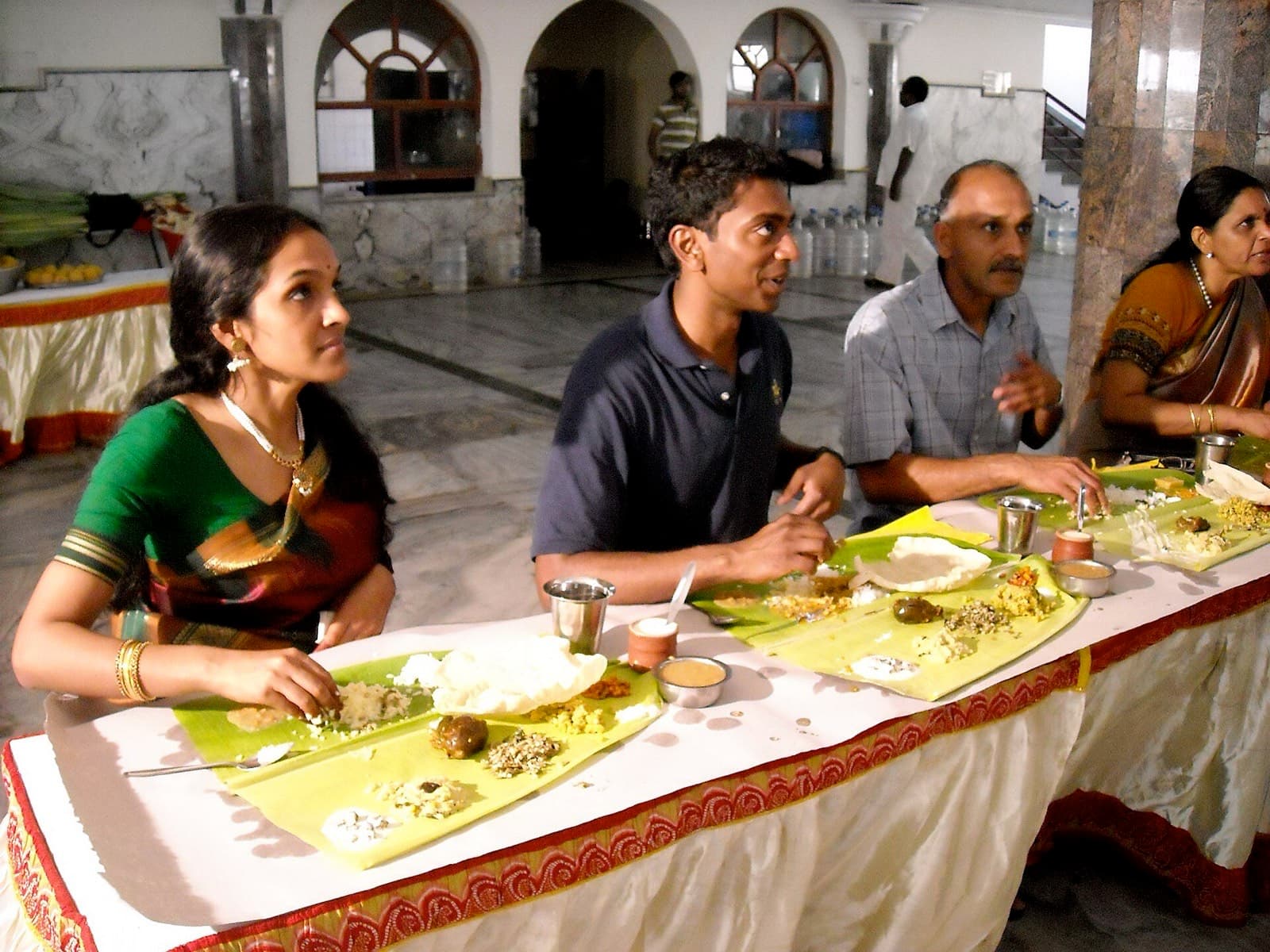
A vegetarian banana-leaf meal is part of many Malaysian Hindu wedding celebrations. At a temple wedding, the lunch arrangements are worth knowing in advance, without assuming a separate menu. The banana-leaf eating practice described by The Star uses the right hand. Guests who prefer cutlery can ask for it.
Allergies need a conversation with the hosts ahead of time and an ingredient check with the caterer. Guessing at a dish is no substitute. At a gurdwara, langar is the communal meal open to people of all backgrounds. Head coverings stay on during the meal, and guests should accept only food they can eat.
When the couple is available, a brief congratulations leaves them time to meet their other guests. The photograph queue is the place for a picture together, without gathering around them during the ceremony. The long catch-up can wait for another day.
Customs and venue rules vary; use this guide as background and follow your hosts' and officiant's directions for the wedding you are attending.