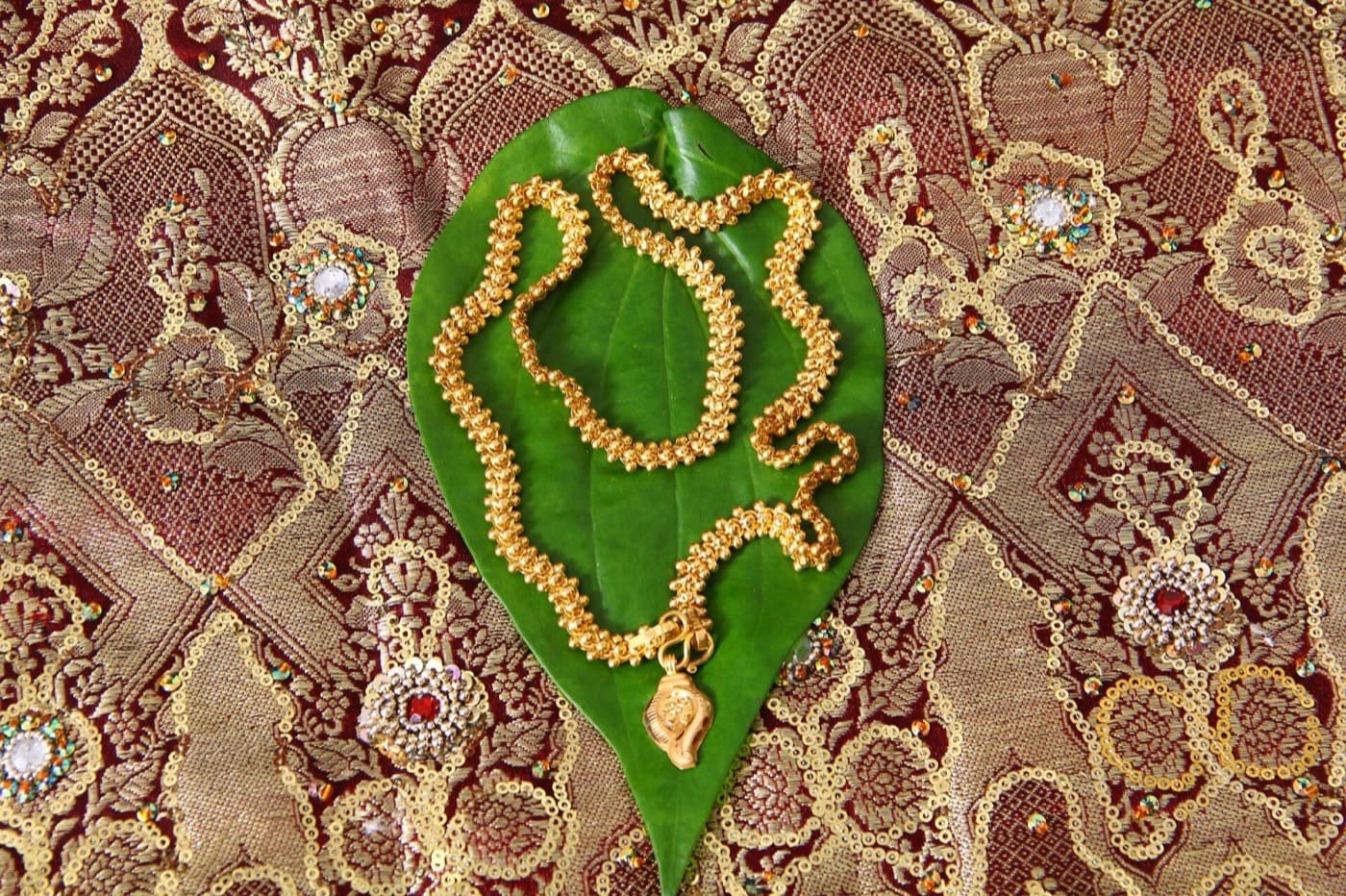
Before the display tray
A relative has a design in mind; you may be picturing something else entirely. Before a thali order reaches the goldsmith, it helps to settle what everyone means by the word. The necklace for the ceremony and the chain you intend to wear afterwards may need separate decisions.
In Malay Mail's January 2025 account of Malaysian practice, the original thali is a turmeric-coated thread tied around the bride's neck with three knots. The account describes replacing that yellow thread with a gold chain, called a thalikodi, on another auspicious date. Knowing which piece is needed at which stage makes the order much clearer.
An agreed note can set out the ceremony piece and who will approve its design. If relatives have different expectations, a conversation together is more useful than competing instructions sent to the maker. An expensive family group chat rendered in gold is nobody's idea of a good order.
A design name is only the beginning
Malaysia has several thali traditions. Malay Mail describes the Telugu pottu thali as dot-shaped and the Malayalee thali as leaf-shaped. Tamil designs include those associated with Shaivite and Vaishnavite religious denominations. Designs also differ between communities, so a photograph can say more than a half-remembered description.
The report identifies more generic options too. These include the Pillaiyar thali and the sulum thali, with its trident emblem, as well as the Amman thali. A familiar name still leaves details to settle before production begins.
A relative's reference photograph gives the discussion a starting point. From there, a drawing or clear photograph with the agreed dimensions beside it records what the maker is being asked to produce. The pendant and chain deserve separate attention. The largest sample in the tray need not decide the purchase.
The customs around an order
The ordering visit can have customs of its own. Malay Mail describes a married woman representing the groom bringing a tray of betel leaves, flowers, fruit and sweets on an auspicious day. In that account, the goldsmith performs a first prayer before handing over the completed thali. These are examples of Malaysian practice, not arrangements every couple is expected to copy.
The same report describes ponnurukku, a gold-melting ceremony practised among Ceylonese families and some Tamil families. In the account, the groom gives a gold coin to the goldsmith at the groom's home, where it is melted to make the thali.
If your family is planning a ponnurukku, tell the goldsmith from the start. Religious arrangements sit with the people conducting the ceremony; cost and delivery sit with the maker. Settling the family's expectations before the ordering appointment keeps those discussions connected without asking the goldsmith to decide family practice.
Christian thali traditions
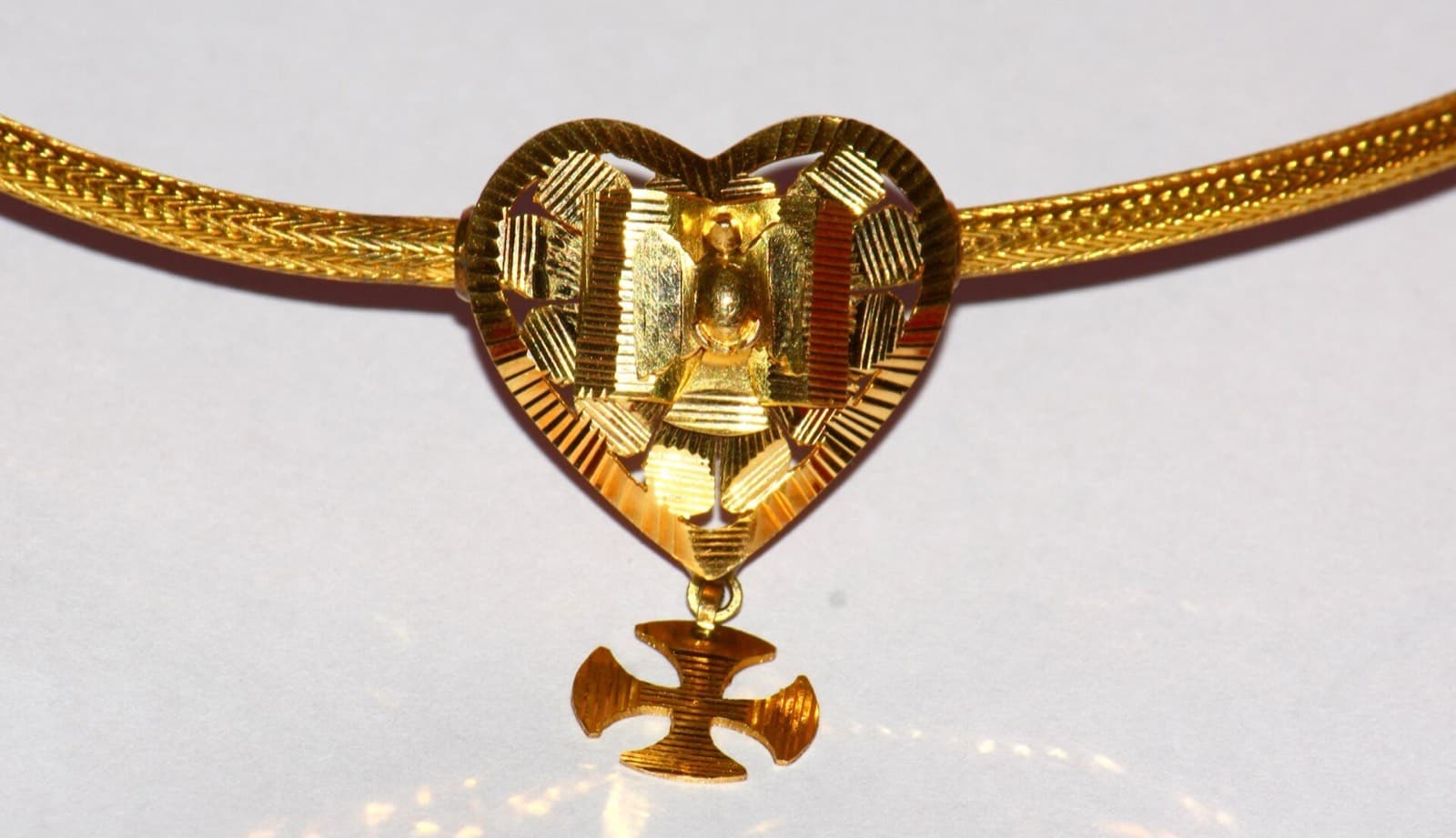
A thali can also carry a cross. Many Tamil Christian families use a thali with a cross, a custom covered in our Tamil Christian guide. The Syrian Christian minnu is another form: Kerala Travel Explorer describes a leaf-shaped pendant bearing a cross. These examples do not mean every Indian Christian wedding includes the same necklace or tying ceremony.
For a Christian wedding, settle the pendant with your family and whoever is conducting the service. Guests can use the name the couple uses. Our Tamil Christian and Malayalee Christian wedding guides offer the relevant starting points, without making a Hindu design reference the default simply because it is easier to find.
Put the order details on paper
One goldsmith interviewed by Malay Mail said the work required at least two weeks. That was his lead time, not a promise that every order can be completed within a fortnight. A written collection date, with room in the maker's schedule to correct a mistake before the wedding, is more useful than a general agreement to order early.
The receipt should sit with the recorded gold weight and an itemised account of purity and making charges. That gives you something to compare with the quoted price. Where possible, the bride can check the intended length before the order is settled.
If your family plans to change from thread to chain, the order notes can also record who will arrange it and which pieces need buying now. It is a better place for that decision than the wedding-morning conversation.
This guide describes practices that vary by family and faith; confirm your ceremony's design and customs with your family and officiant, and production details with the maker.